




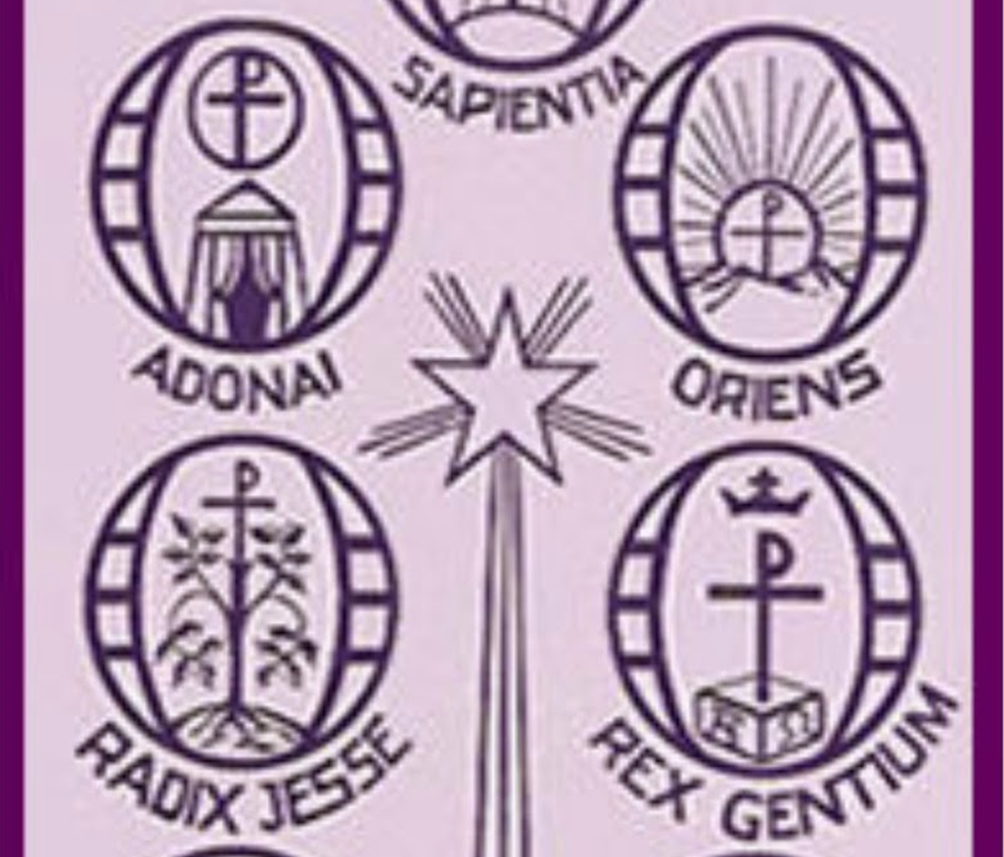
The O Antiphons developed during the Church’s very first centuries. The writer Boethius (+525) mentions them. By the 8th century they were in use in Rome. There are seven of these special antiphons, and their texts spring from the Old Testament Hebrew Scriptures, the Prophetic and Wisdom Books. They are found in the Liturgy of the Hours or older Roman Breviary, which clerics, religious, consecrated virgins, and others use for daily prayer.
The O Antiphons are short prayers sung before and after the Magnificat, the great prayer of Mary in Luke 1:46-55 when coming visit to Elizabeth her cousin the Virgin praised God for His favor wondrous deeds. The Magnificat is sung during Vespers, evening prayer. The O Antiphons begin on 17 December, seven days before the Vigil of Christmas (24 December). The seventh and last antiphon is sung at Vespers on 23 December. They are called the “O Antiphons” because they all begin with the letter-word “O”: they address Jesus by one of His Old Testament titles. They are fervent prayers asking Our Lord to come to us. The carol “O Come, O Come, Emmanuel” is simply a reworking of the seven O Antiphons. When you sing it, you are joining yourself to a vast throng of Christians stretching back across centuries and spanning the whole of the earth who prayed as all Christians do, “Come, Lord Jesus!” (Rev 22:20). The Latin versions of each of the titles of the Messiah are: Sapientia (Wisdom), Adonai (Lord), Radix (Root), Clavis (Key), Oriens (Dawn), Rex (King), and Emmanuel (Emmanuel). Take the first letters of each of the titles, starting with the last and working back to the first. You spell: EROCRAS or “ero cras… I will be (there) tomorrow”. Fr John Zuhlsdorf.