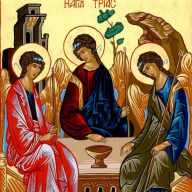






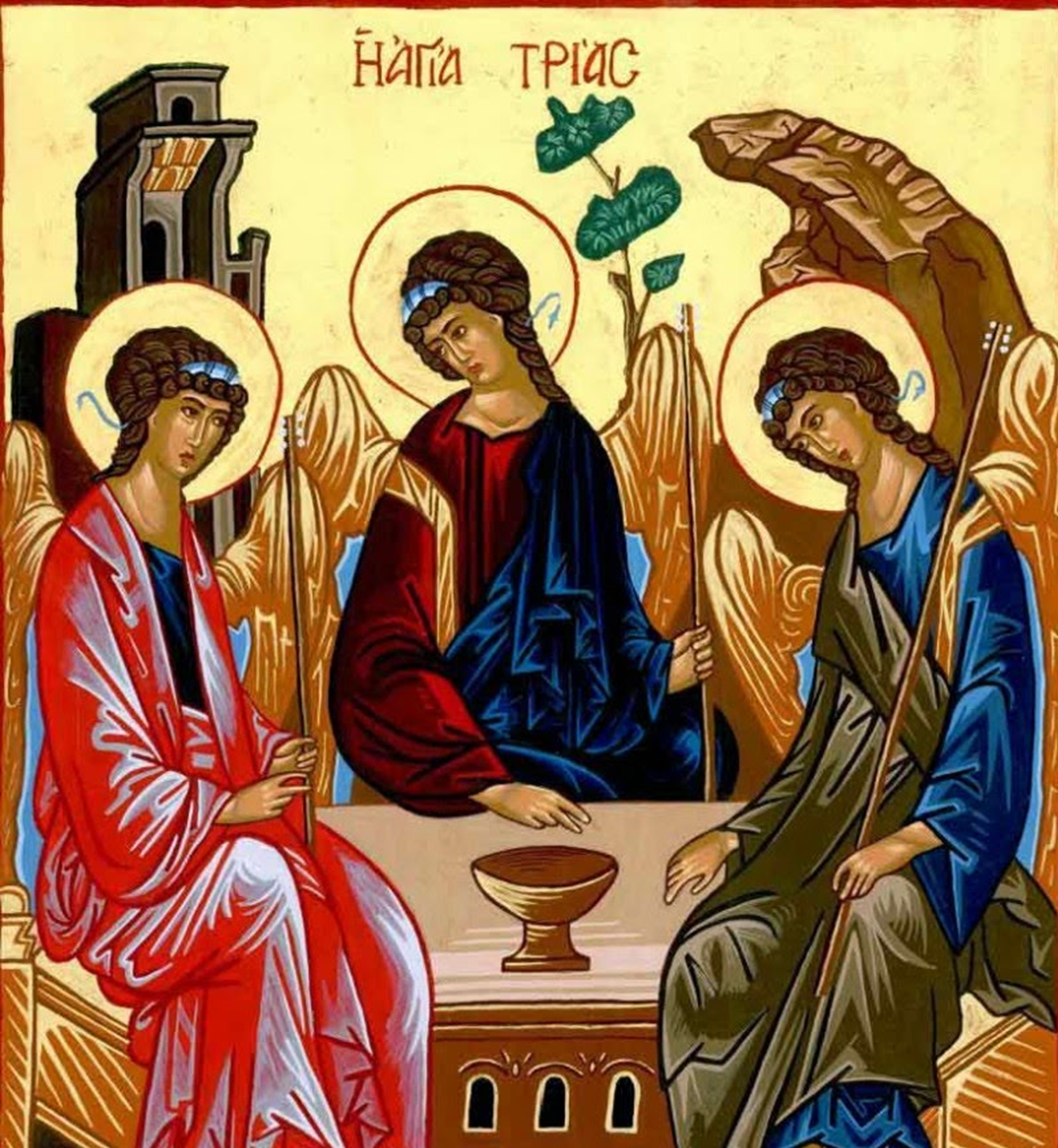
The Holy Trinity is the way we describe the inner nature of Almighty God. We could know nothing of how God is in himself – only his external actions and impact on our lives – if he had not chosen to reveal himself to us. There are glimpses of God as three in one in the Old Testament, e.g. when the three heavenly messengers some to Abraham at the oak of Mamre but it is Jesus who reveals God as Father, Son and Holy Spirit – not only in his command to the disciples to baptise all nations at the end of St Matthew’s Gospel, but also in the way he speaks of his relationship with the Father and the promise of the Holy Spirit in St John’s Gospel. It took the Christian community three hundred years of reflection and discussion to come to a settled view on what this means and to put it into the words of the Creed of Nicaea and Constantinople that we say at Mass every Sunday. Inevitably not everyone accepted this consensus. Arius and his followers (including today’s Jehovah’s Witnesses) rejected this as a challenge to the oneness of God and held that only the Father was truly God. It is hard to keep the balance right and we can easily use ‘God’ as equivalent to ‘Father’ when all prayer is directed at least implicitly to the Trinity as a whole – usually to the Father, through the Son, in the power of the Holy Spirit.