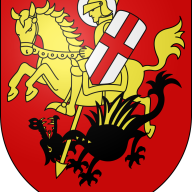






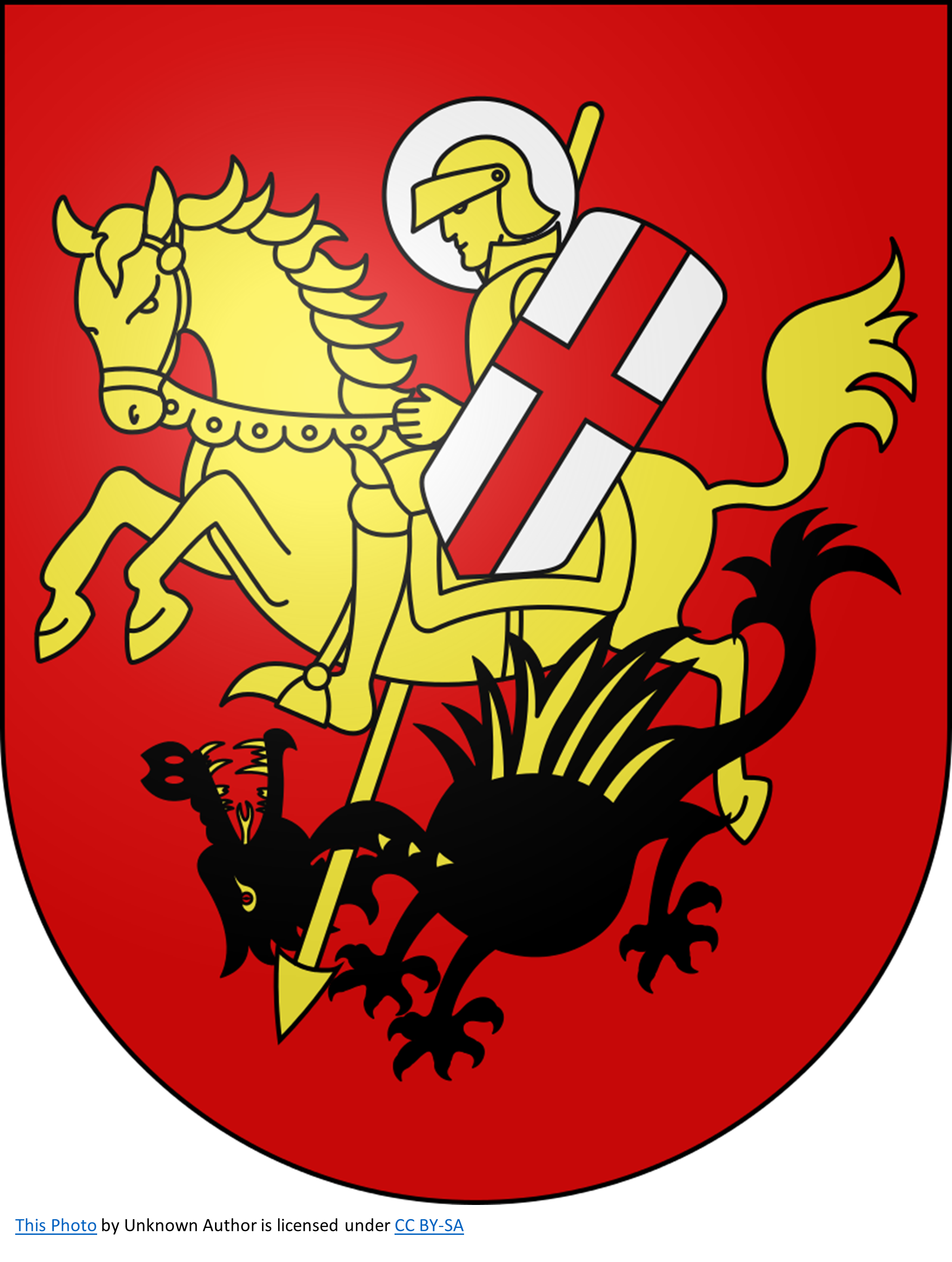
The true circumstances and date of his martyrdom are uncertain, and the accounts soon became embroidered with sometimes contradictory details. The story of the dragon is not found before the Twelfth Century. In the East, St. George (ho megalomartyr), has from the beginning been classed among the greatest of the martyrs. In the West also his cultus is very early. Apart from the ancient origin of St. George in Velabro at Rome, Clovis (c. 512) built a monastery at Baralle in his honour. Arculphus and Adamnan probably made him well known in Britain early in the eighth century. His Acts were translated into Anglo-Saxon, and English churches were dedicated to him before the Norman Conquest, for example one at Doncaster, in 1061. The crusades added to his popularity. William of Malmesbury tells us that Saints George and Demetrius, "the martyr knights", were seen assisting the Franks at the battle of Antioch, 1098. It is conjectured that the "arms of St. George " (a red cross on a white/silver background) were introduced about the time of Richard Coeur de Lion. In the fourteenth century, "St. George's arms" became a sort of uniform for English soldiers and sailors. In England St. George's day, 23 April, was ordered to be kept as a lesser holiday as early as 1222, in the national synod of Oxford. In 1415, the Constitution of Archbishop Chichele raised St. George's day to the rank of one of the greatest feasts and ordered it to be observed like Christmas day. During the seventeenth and eighteenth centuries St. George's day remained a holiday of obligation for English Catholics.